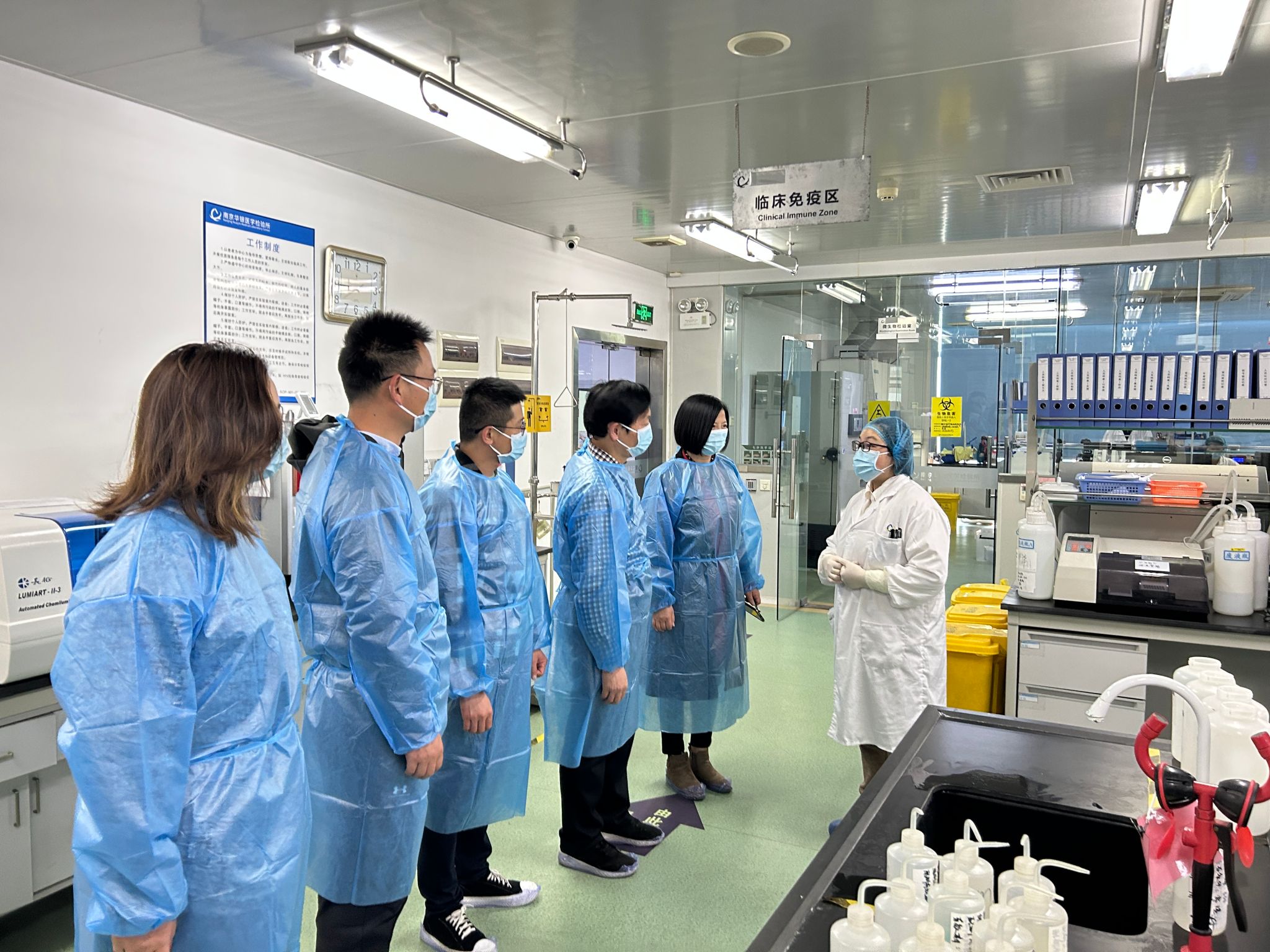
Frisbee and footbridges

Our middle one discovered there could be proper rules for throwing frisbees while he was at secondary school, but it wasn’t until he was at university that he took up playing “Ultimate” seriously.

And it wasn’t until this weekend that I made the time to go and watch.  I took with me our youngest – who also plays, though not quite as keenly – to explain the rules to me.

The venue was in Nottingham, on playing fields alongside the River Trent.  There was a strong wind, overcast skies and splattering of rain.  Not the ideal weather for either playing or spectating.   The two of us caught the train to Beeston and cycled to the venue for the afternoon.  Three hours of a weekend-long tournament was enough for me, given the weather!

The most notable element is refereeing.  They don’t have one.  Infringements are self-accepted, or occasionally challenged, debated and a concensus reached.  Very adult and civilised.

Otherwise it came across to me more like large scale netball (stand still when you’ve holding the ball/disc) with ends in which to score rather than hoops.  There’s more about it here.  I can see why people are attracted to it – but it didn’t make me immediately wish to take up the sport…

We cycled back to Beeston station but the train was packed with people who’d presumably been shopping in Nottingham.  We weren’t able to squeeze on, and had to watch the train leave without us.

Luckily I have cousins living not far from the station and we took the opportunity of a half-hour catch-up.  One of Paul’s  major news items related to Nottingham train station.

Like Derby, Sheffield and, I’m told, York, Nottingham had a footbridge route through the station which not only allowed passengers to leave on either side, but which the public could use to cross the railway.

As part of the current train operating contracts, the government has sought to clamp down on ticket evasion by requiring stations to be gated.  As a result the path through Nottingham station was subject to a temporary closure, while a permanent closure was sought.  The route was a Public Right of Way and the closure was challenged by the Ramblers Association and others.  Paul was involved in the campaign and further information on this is available on his website.

His news was that the Planning Inspector had recently decided not to allow a permanent stopping up order.  What will happen next?  We wait to see!

In Derby a similar situation is managed by staff allowing access across the station bridge on request.  This was negotiated with the council, as although the route is not a Public Right of Way, the bridge was extended with public funding to provide access to and from Pride Park.  In Sheffield there are plans to build a whole new footbridge not connected to the station.  I don’t know about York.

But why is this happening?  It seems to me that the requirement to gate stations has been a knee-jerk reaction to the problem of people travelling with tickets.  Reducing ticket evasion is fair and important, but is gating stations the right answer?  As more and more tickets are computer printouts or smartphone screens it also means that all the gates need to be staffed to allow all the exceptions to the standard ticket to be examined.

If the franchise agreements had not been so prescritive, would better solutions than gates have been proposed?  Solutions that would both allow friends to bid farewell on the platform and allow local people to continue to use the bridges without challenge?

Is this an example of Labour micro-managing the railways?

Posted in Transport | Tagged , , , , , , , , , , , , | Leave a comment

Engineering and the Lib Dem Conference

I returned from the Lib Dem Conference in NewcastleGateshead last night.  It was a good weekend – and the Conference rushed past.

It would have been good to see more of the city but all I managed was to vary my cycle route between my hotel in High Elswick (that’s “Els’ick” without a ‘w’) and the Sage Conference Centre in Gateshead (on the other side of “the water”).  The bridges across the River Tyne are wonderful and I used five of them!

NewcastleGatesheadflyeringI had commitments in my diary as a member of Federal Conference Committee, and some of my free time was spent handing out leaflets to Conference goers about the need to keep to the Coalition Agreement.   On the flyer I used the Engineering Diploma issue (see my previous post) as an example of where the Government has gone against the spirit (and I’d say the word) of that Agreement. 

I also prepared a speech for the debate on the ‘Greenest Government Ever’ (see sheet 43 of image, page 41 of book), but unfortunately, although I was told I was initially being included in the line-up to speak, the Secretary of State, Ed Davy, put in a card and he took precedence…  So if you’d like to know what I would have said, read it here

In the short term at least, this will be remembered as the NHS Conference.  It was a close call as to which of the two NHS motions was taken to debate in the emergency motion slot on the agenda.  The decision was taken by Conference representatives from a total choice of four motions.  And the final outcome – Conference giving Lib Dem peers a free vote on a further amended Health and Social Care Bill – did not feel anything like as divisive at Conference as was reported in the media.

Coalition is not easy: It wasn’t easy when I was on Derby City Council in 2003-5 either!  But it does mean that many Lib Dem policies are now being delivered – like the pupil premium, raising tax allowances, rolling back some of Labour’s illiberal laws and pushing forward a greener agenda.

In six months, Lib Dems will be back at Conference continuing the fight for a more democratic and liberal country.  We had perfect weather on the banks of the Tyne.  Will Brighton be as kind?

Posted in Engineering, Liberal Democrats, News, Social & Community | Tagged , , , , , , , | Leave a comment

Does Derby know where it is going?

Transport planning in Derby seems, at least from my now rather more distant view, not as joined up as it should be.

While I was the Council’s Cabinet member with responsbility for transport, Derby was one of Cycling England’s ‘Cycle Demonstration Towns’.  It worked closely with schools on cycle training and the priority given to active travel (cycling and walking) meant that the new part of the city’s inner ring road is cycle friendly.  Although Cycling Demonstration Towns are no more, the City Council is about to put in a repeat bid for funding for more sustainable transport initiatives – from the Local Sustainable Transport Fund. 

It’s good stuff, and to be applauded.   As oil supplies become tighter – and as I write the price of Brent oil is around $120 a barrel – driving is inevitably going to become more expensive over time.  Building a transport network that includes attractive off-road cycle and walking routes is going to help give people an alternative - and the bid also includes personal support to individuals and businesses to give them to confidence to try the alternatives themselves.

That’s the positive.  Now the negative.

A couple of weeks ago I learnt that not only is my local ring road central reservation gap being closed, but it is not even going to  retain a route for cyclists or dropped kerbs for pedestrians.  I am not impressed.  I asked whether, when the nearby traffic lights (which I knew were due to renewal) were upgraded whether cycle crossing facilities would be provided, and cycle provision made on the (lightly used) pavement.  I was told no – there wasn’t road width for the cyclists in the central crossing areas).  I felt resigned.

A few days later, road works started on Uttoxeter New Road just down the road from  the Royal Derby Hospital.  Since the hospital expanded from the old “Derby City General Hospital” traffic has become an issue.  And on the other side of the road is a large development site, with plans for more homes and businesses.

‘What are they doing?’ I wondered.  Using past contacts at the council I enquired…

They are widening the central reservation to give more queuing space towards the lights.  Fine I thought.

And stage two, I was told, this coming summer, is to redo the junction – the same junction as I was enquiring about earlier.  They intend widening the carriageway to three lanes, on both sides, to have at least two lanes of general traffic, and maybe (yes, only maybe) a bus lane too.

This is why there isn’t room for cycles to be included alongside pedestrians: they are giving more space to motor transport!

How does this square this with our bid for more sustainable transport?!  We’re widening the road to be crossed.  We’re making it easier for cars to get through here, just to clutter up streets elsewhere.  What are we doing to make it easier or safer for cyclists and pedestrians?

I called more past contacts within the transport section, and I raised the issue at monthly meeting of the local cycle campaign, Derby Cycling Group

I’m now hearing that the plans for the junction are not as complete as I had previously been led to understand.  Hopefully this means that a new set are being drawn up which will be better for walkers and cyclists…

Posted in Environment, News, Sustainability, Transport, Uncategorized | Tagged , , , , , , , , | Leave a comment

JCB Academy undermined by Gove

Last week I had the chance to visit the JCB Academy in Rocester, on the Derbyshire/Staffordshire border.  It opened just 18 months ago with the active support of leading local businesses, like Rolls-Royce, Toyota, Bentley, Network Rail and of course JCB.   It is now one of the first two of the government’s new “University Technical Colleges” and has a host of partnering universities including Cambridge, Warwick and Loughborough.

Yet another category of school (to go with academies, community schools, foundation schools and so on) is not something I readily support, but the JCB Academy is rather different.  And the thinking behind it is something that I support absolutely wholeheartedly.

For too long engineering and technical careers have been seen as the poor relations, though this attitude seems to be something peculiar to the UK.  In most countries aspiring parents would look with equal favour on their children starting careers as a doctor, engineer or lawyer. 

All require vocational learning – but I would put the engineer as most progressive.   Most doctors and lawyers apply their knowledge to a substantially fixed subject; the human body or the laws of thte land.  But engineers, not only have to know their subject, but can design, develop and build it anew!

Anyway, back to the JCB Academy…

Engineering businesses have been struggling to recruit suitable people for technical roles.  Some vacancies are filled by people from overseas, and others remain unfilled.  This is despite the good number of training places that companies like Rolls-Royce and Toyota offer for both graduate intakes and for apprenticeships.  There just aren’t enough young people looking to go into engineering careers at 16, 18 or 21.  The scope of engineering needs to be promoted earlier.

So when the opportunity to run their own school, with their own curriculum, arose, JCB worked with other local companies to start the JCB Academy.  They linked up with a range of universities to develop a purpose-designed curriculum which is validated by exam board OCR.  They take pupils from Year 10 (14 year olds).

If I were 14 again, I’d apply to go.  If my children weren’t also too old, two of them might well have applied too.  The facilities are excellent, and I really like the idea of their engineering diploma.

But the government doesn’t.  Or at least Michael Gove, the Conservative Secretary of State for Education, doesn’t.  He has just told them that their diploma, which was assessed to be the equivalent of 5 GCSEs (and takes around half their school week to teach) is only worth 1 GCSE.  OK, some vocational qualifications aren’t equivalent to even one GCSE, but this isn’t the case here.

The partnering businesses and universities know the value of engineering and the importance of technical education.  Partners like these are not going to endorse ‘Mickey Mouse’ qualifications.  The OCR Engineering and Business Diplomas they have helped develop are academically rigorous, engage young people – and provide the learning for the next generation of engineering professionals at all levels.

If you, like me, are angry that the government encourages businesses to invest in Academies, and then pulls the rug from under them by devaluing their work, write to Michael Gove and tell him so.  His email is michael.gove.mp@ parliament.uk

There is also discussion on this on Lib Dem Voice, following from an article I put there.  And you can see another piece I’ve written on this from a more party political perspective here.

Posted in Engineering, News | Tagged , , , , , , , | Leave a comment

Give Blood!

I was about 18 when I did it first – give blood that is.  I’d been several times when my mother, or occasionally my father, had donated so it wasn’t entirely new.  But I was working away from home - and went with my landlady.

I’d recommend that – going with someone else. 

Almost the next time I went was when I was at university.  My room-mate, together with two girls who shared another room down the corridor decided to go – and on the way took with us another friend.   Made all five of us feel very virtuous!

In my 20s one of my aunts needed repeated blood transfusions, and I counted up how long it would take for just me to put enough blood into the ‘bank’ for her treatment.  It helped make me realise how important an act regular giving is.

Recently they’ve reduced the period between donations – as they did during World War 2.  It makes one think.  They’ve also got a lot smarter at reminding one when it’s time to give again – not just letters and postcards, but also phonecalls.

Do I feel pestered?  No not really.  It’s simple to give.  And it’s good to know there’s blood in the bank just in case…

But what does worry me is that there seem to be fewer young people giving.  When I last gave, in January, I was one of the youngest there.   That’s worrying.  I’m over 50!

Are so few people able to give?  That time at university only one of our group of five was able to - two didn’t weigh enough, one had had malaria, and another had only recently recovered from glandular fever. 

Luckily that’s not typical.  Of the five in our family, four out of five give regularly.  And the fifth would if it wasn’t for long term medication.  Why?

I think that one reason is that we took our children with us when they were young.  And we talked about why it was important.  It became an event – with free biscuits and squash!

There used to be stickers for children “My Mum gave blood today” and the like.  But I’ve not seen them lately.

When someone from the National Blood Service phoned today (a reminder for my son) I asked about promotion.  He remembered the stickers, but it sounds as though child protection and health and safety is becoming a barrier.  Is this short-sighted?  I fear so.

They write to 17 year olds, and to people passing their driving test.  Would they respond better if they’d been with mum and dad as a child?  And is this the best time to catch people?

I suggested another group to target: young parents.  The trauma of birth over,  giving blood could be a good way for new dads to say ‘thank you’ to the NHS.  And a short year or so later mum could join the outing, with little one asleep in the pushchair…

So if this is their next recruitment drive, it might be due to me!

Posted in Uncategorized | Tagged , , | Leave a comment

So they are real!

Credit and debit card fraud is something that everyone is reminded of again and again.  We’re told to be careful online…  at the ‘hole in the wall’…   on the phone…  when you pay in a shop…

Is it all blown up out of proportion?  Are there really people around every corner trying to diddle us out of our cash? 

Every now and then one hears about someone’s close shave - or downright misfortune. 

One of those second hand events happened for me this week – actually a third hand event.

One of my husband’s colleagues returned to work in the evening, having been back to the nearby ATM he’d used earlier in the day.  Something had been niggling at the back of his mind, and he went back to check it out.  On that second inspection he confirmed that it had been tampered with.  The bank was closed, so he prised the extra assembly off the unit himself.

The professional looking unit was designed to read the data from each card legitimately put into the unit – before it got to the proper reader.  He reported it to the police and sent his colleagues a warning to watch out for unaccounted transactions on their accounts.

So whether you live in Derby or elsewhere – please keep your eyes peeled!

Posted in News, Social & Community, Uncategorized | Tagged | Leave a comment

A different way to look at the economy

Concern about credit, borrowing, the recession and banking is there every day in the media.  Now the Euro and the impact that its problems may have on the pound is the new angle of the old theme.

It begs the question as to what the economy is actually set up to work for?  Do we understand how the economy works?  Or  how to make it work for people?

I tend to look at the real world impacts and the bigger picture, and as I’ve not trained as an economist maybe I can see things afresh!  Accordingly I submitted a short piece to Lib Dem Voice, which explores one angle about where we ought to go.  You’re welcome to read it!

Posted in Economy, News, Social & Community, Sustainability | Tagged , , , , | Leave a comment

Valuing what we’ve inherited…

Our house was built in the 1930s, and last summer we renewed our roof.  It hadn’t actually started leaking, but tiles were beginning to slip and crack, and the job clearly needed doing before we had a real problem.  Other people in our area have been doing the same thing.  After nearly 80 years this probably isn’t surprising.

It’s clear that it’s not just houses that were constructed years ago and we’ve inherited.  All around us there is infrastructure that we take for granted.  Some of it – like roads – it is clear that we need to repair on a regular basis.  Other elements most people only think about either when something goes wrong, or repairs are particularly disruptive.

In Derby over the last few years we’ve had programmes of sewer replacement, gas main upgrading and lining of water supplies.  In 2012 there is due to be a new 132kV cable run through Derby from near Willington to by the Silk Mill, replacing one that’s around 70 years old which provides nearly half Derby’s power – and is on its last legs.  Most people accept the disruption these sorts of works cause with good grace, but should we be recognising something beyond that?

Life, as we know it, would not exist without decades, in many cases centuries, of investment by people before us.  The canals, railways and local road network, the whole water supply and sewage systems, the gas and electricity distribution networks, motorways and trunk roads, our homes and public buildings, factories and shops…  We take them for granted, and building them all from scratch we’d find unaffordable even in these still relatively affluent times.

Yes, they are relatively affluent, despite the downturn.  The navies who dug the canals and built the railways didn’t have centrally heated homes to return to – even if turning the heating on is becoming unaffordable.  When Derby’s Council House was built and electricity pylons began marching across the land, children ran round the backstreets with no shoes on.

The investment that’s now needed to maintain and improve our infrastructure for the next 100 years is something that we shouldn’t skimp on – for the sake of our children and our children’s children.  Although prices are rising, it is unlikely that energy and materials will ever be as cheap again as they are now, so we need to invest wisely.

What will be needed in 100 years, not just the next 20?  How can we make it flexible for unknown future demands?  And let’s aim to afford it ourselves, not leave it as a debt for future generations to pay, when they are likely to have their own infrastructure challenges to afford.

Posted in Economy, Energy, Engineering, News, Social & Community, Sustainability, Uncategorized | Tagged , , , , , , , | Leave a comment

Let the buses – and cycles – through!

trentbarton’s express bus services between Derby and Nottingham, the Red Arrow is a public transport success.  Using the A52 – Brian Clough Way – it speeds its way between these cities with a bus every 10 minutes during the day.

Most of the route is dual carriageway.  At the Derby end this goes all the way to the bus station, though queues at the junction with the A61 – Pentagon Island - can be a problem, but the driver has the freedom to try alternative routes at peak times.

At the Nottingham end it’s more difficult.  The bus lane on the A52 where it runs between Beeston and Bramcote is wonderful, but the road narrows between Wollerton Park and Nottingham University.  This section – just over a mile – can seem very slow if the bus is crawling in peak hour traffic.  Then the bus lanes return and it’s on into Nottingham proper and the journey is all but over.

Today I was at a Highways Agency regional meeting for people representing groups of non-motorised users (NMUs!) of their network.  I was there for Derby Cycling Group.  There was also a representative of Pedals – the equivalent cycle campaigning body in Nottingham.  And this Wollerton Park section of the A52 trunk road came up in discussion.

Not only is this a pinch point for buses, it also is for cyclists.  Either side of this length, the cyclists share the bus lanes, but here they have no help.  The pavements are apparently too narrow to make shared use, and alternative routes beyond the park and university campus mean significant diversions.  Pedals have suggested on-road cycle lanes.  The Highways Agency is less than sure.

I think this should be explored further.  At present, at peak times, we were told the traffic apparently uses the width  of the generous traffic lanes to the full, by forming two queues sometimes down most of the length of this section of road.  There are two – even three – official lanes as the road meets the roundabouts at each end of this section, and drivers are anticipating these. 

No wonder the bus has difficulty.  It’s having to wait for two lanes of traffic to get through the roundabout ahead of it!  If this traffic were in one lane with the rest queuing further back, before the roundabout, the bus could have passed half the queue while still in a bus lane.  There’s another mile and a half of queuing opportunity further back!

For traffic going straight on into Nottingham it would make no difference whether they queue before or after the roundabout.  However there will be more delays to people waiting to turn left or right.

Would giving the bus – and cyclists – more advantage like this encourage more people to use the bus instead of their car?  In most of the country, traffic levels peaked a couple of years ago and are now steady or falling (see p9 on this link).  Giving people an attractive alternative is one way to encourage this virtuous trend.  Could this be one way to encourage more ‘modal shift’ - and would it mean the Red Arrow becomes so popular that it can support not just six, but eight, buses an hour?

UPDATE - next day…

I’ve now been out to get a photo of a Red Arrow bus to illustrate this post – and had the opportunity to speak to one of the Red Arrow drivers.  He didn’t recognise the description of two lanes of traffic queuing down this section – he said that except at the junctions it’s only one abreast.  Queue-shifting may therefore be more difficult to achieve than just by giving the cyclists some help…

Posted in News, Social & Community, Sustainability, Transport | Tagged , , , , , , | Leave a comment

A short-term annoyance for a long-term benefit

For the last few months the ‘Riverside Path’ from behind the Council House to Bass’s Rec has been fenced off.  The signs directing people around this blockage – which is part of Sustrans Route 6 - are inadequate.   Despite Derby Cycling Group asking for improvements to the signage nothing changed.

And it’s not as though the solid hoardings are hiding bad news.  The work going on behind them is, certainly in my mind, very positive.  After long negotiations with the Environment Agency and agreement from its own Planning Committee, the Council is installing a turbine to generate electricity to help power the refurbished offices in the Council House – and any excess can be sold.

Even that itself is a good news story.  Until the current Government came to power, the Council wouldn’t have been able to sell the electricity it generated…

In 1960 there were 20 turbines powered by the River Derwent as it flowed down through Derbyshire.  Since then many have been decommissioned, and three years ago there were just four sites left with turbines – this one will be the fifth.

The Longbridge Weir, across which it will sit, was originally constructed in 1819 to divert water into the mill fleam used to power the mill which sat roughly where the Council House now is.  Now the water will be diverted to flow through the turbine rather that fall splashing over the weir.  This height difference will allow it to generate enough electricity to power about 300 homes, about 1.3million kWh per year – most of this will be used by the Council.  There is more information about the scheme and its impact here.

Once the scheme is completed, the Riverside Path will be reopened, and I hope that at least then there will be some signage to tell people what is going on.

There are two more weirs on the River Derwent within the city boundary – at Darley Abbey and south beyond Raynesway.  I hope that these will also be able to be used to provide ‘green’ electricity to help power the city.

Posted in Economy, Energy, Engineering, Environment, News, Planning, Social & Community, Sustainability | Tagged , , , , , , , , , , , , , | Leave a comment